An adult student was sharing his opinions with me about teachers’ qualifications; various TESL certificates and diplomas, past employment experience as an Examiner, years of experience in classrooms or online. We discussed whether or not a Linguistics master’s was a necessary requirement for ESL teachers and I decided to write this post to explain what TESL programs aim to do.
Good initial training programs equip teachers with a strong foundation in multiple domains:
i) knowledge areas: grammar, syntax, phonology, second language acquisition
ii) teaching the four skills of language: listening, reading, speaking and writing
iii) general teaching skills: learning objectives, lesson planning, course design, assessment, choosing or developing materials, classroom management, feedback on error, testing
As an example, here is the content of my year-long DTEFLA training program:
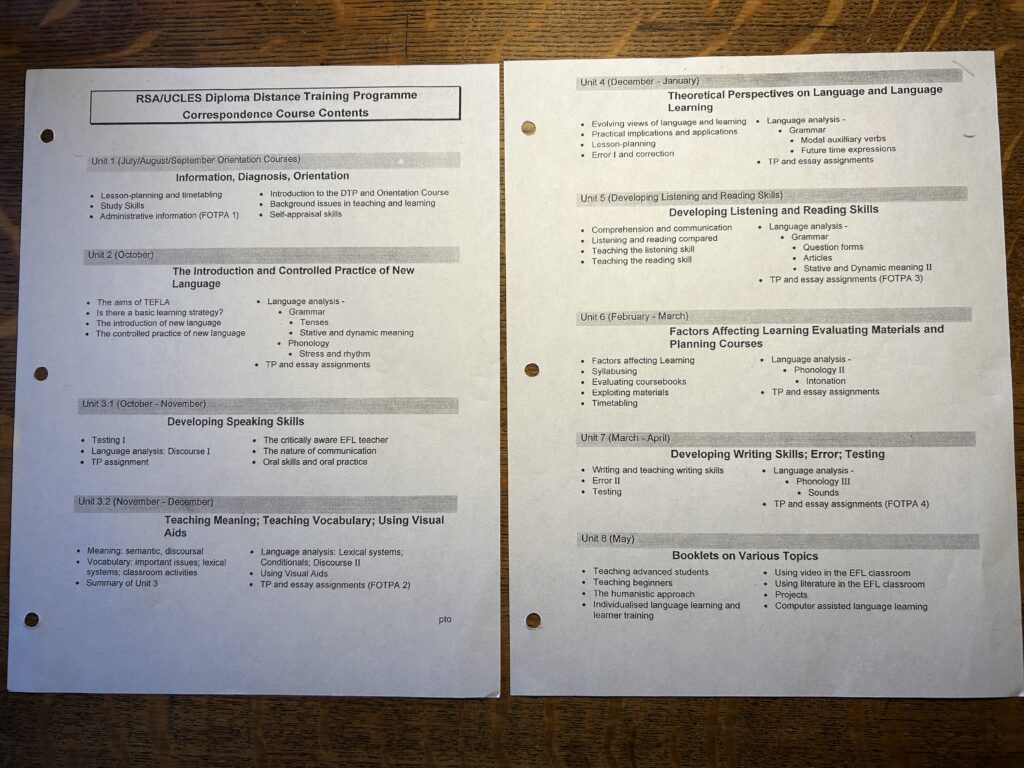
And here is the syllabus, and a letter from the Head Tutor attesting to the length of the course:
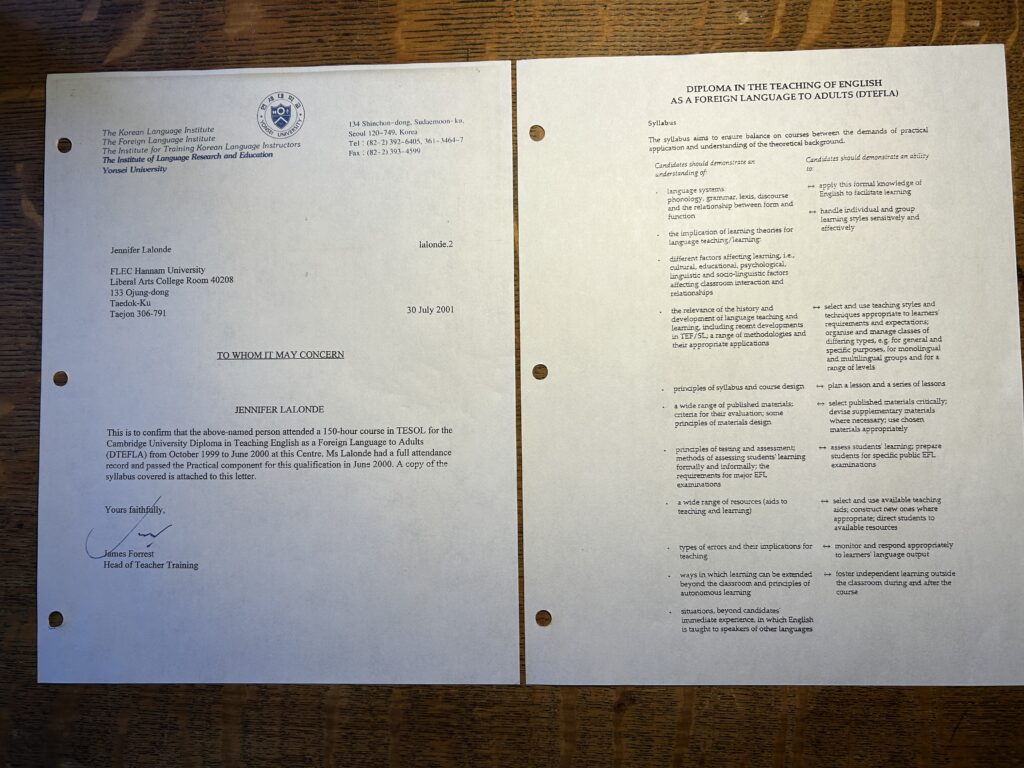
As you can see there was a year of study; my group of fellow trainees met every Saturday for input sessions. There was a reading list with about 30 recommended textbooks and we completed readings for each unit in preparation for lectures and discussions on Saturdays. Throughout the year, there were assignments and classroom observations. In order to earn the diploma, candidates had to pass the written exam: six essay questions in six hours over two days, which were sent to Cambridge for marking, and the practical teaching exam: two observed lessons by an Examiner from London, UK.
I passed the practical component on my first attempt but not the essay portion. I still recall the essay question I failed: explain my approach to teaching modal verbs at a variety of levels and in reference to two first language groups. Cambridge offers one additional attempt and so I studied over the following year in applied what I was learning in my lessons to university students and workers in the context of a continuing education program. A master’s in linguistics or teaching reading or phonology will test subject knowledge whereas TESL training programs prepare candidates to succeed in the classroom. The DTEFLA is a professional diploma that communicates to employers and students that a person can apply knowledge in planning and delivering instruction.
Most teachers, as time and budget permit, will continue learning through additional degrees or professional development. A master’s degree in core linguistics: phonology/phonetics, syntax or discourse analysis but reading the textbooks and keeping up with research works, too. In short, teacher preparation programs prepare people to succeed in a classroom. ESL draws on a lot of knowledge areas and the best teachers are lifelong learners, avid readers and critical and self-aware practitioners.